
Lighten Up: In Praise of Caprice


The first edition of Piranesi prints of Prisons were called “Capricious Inventions of Prisons…”[1], while later editions called them Carceri d’Invenzione, Invented Prisons. Some scholars believe he spent time in Tiepolo’s studio before coming to Rome, and it may have been there that the idea of caprices came to Piranesi: Tiepolo had been working for years on a series of small figurative prints that would eventually be printed by Anton Maria Zanetti as Varj Capriccj, Various Caprices. Tiepolo’s capricci consisted of figures enigmatically engaged in some mysteriously fraught activity, propped up by modest architectural staffage, whether a large urn or some building fragment. Piranesi’s capricci were architectural, populated by scratchy figures as staffage. Many of Piranesi’s frontispieces for later sets of prints documenting ancient Rome were themselves fantastical capricci, piling up allusive fragments to hint at the real wonders his publication will reveal.
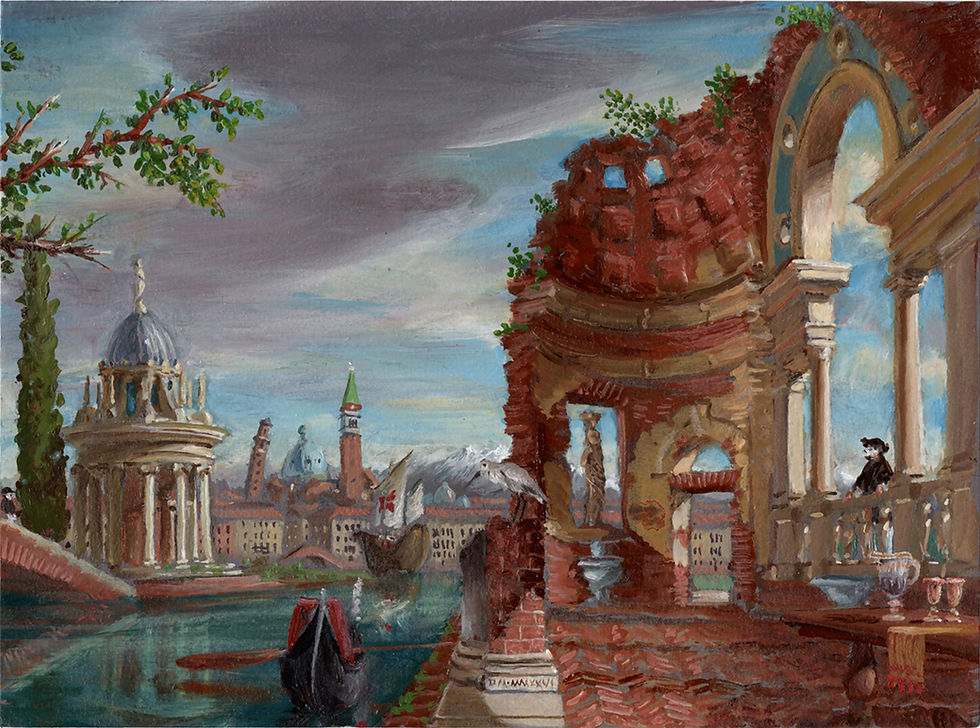
Piranesi did not invent the architectural capriccio: his fellow Venetian Canaletto began his career with architectural capricci set in the Venetian lagoon, possibly as studies for stage sets (his father’s specialty), in the tradition of Marco Ricci. And in Rome Giampaolo Panini was the great practitioner of the painted capriccio, rearranging Roman ruins into fantastical compositions.
While art within the classical tradition was always rooted in, and valued because of, a deliberate program of meaning, especially in the 18th century artists experimented with the ambiguous meanings of “pure” invention. Not meaninglessness, but ambiguity, evocative enigmas: even with (or even more so with) architectural capricci, the intentions are murky, but they are never unintentional. By employing recognizable monuments, or variations on them, artists like Panini or Piranesi or Canaletto set up a game of dislocation—places that were reminiscent of either the Roman Forum or the Venetian lagoon, but reimagined. Familiarly unfamiliar worlds.
This was a serio ludere, a serious game, played for the sake of emulation (rivalry by imitation) or for testing the liminal margins of invention. Today, we either take architecture too seriously, or not enough: in the former case we see it as either the destruction or salvation of society and the environment, in the latter it’s at best mere packaging and at worst shelter.
Can architecture be fun again?

[1] Invenzioni capricci di carceri all'acqua forte date in luce da Giovani Bouchard in Roma mercante al Corso
Comments